

Smart Leak Detector Review for Raleigh Homes

A washing machine hose can drip for weeks without announcing itself. A toilet seal can fail behind a closed door. An upstairs bathroom leak can reach the ceiling below before anyone sees a stain. This smart leak detector review looks at what these small devices do well, where they fall short, and how Raleigh homeowners can choose a setup that catches trouble before it turns into drywall repair, flooring damage, or mold cleanup.
What a Smart Leak Detector Actually Does
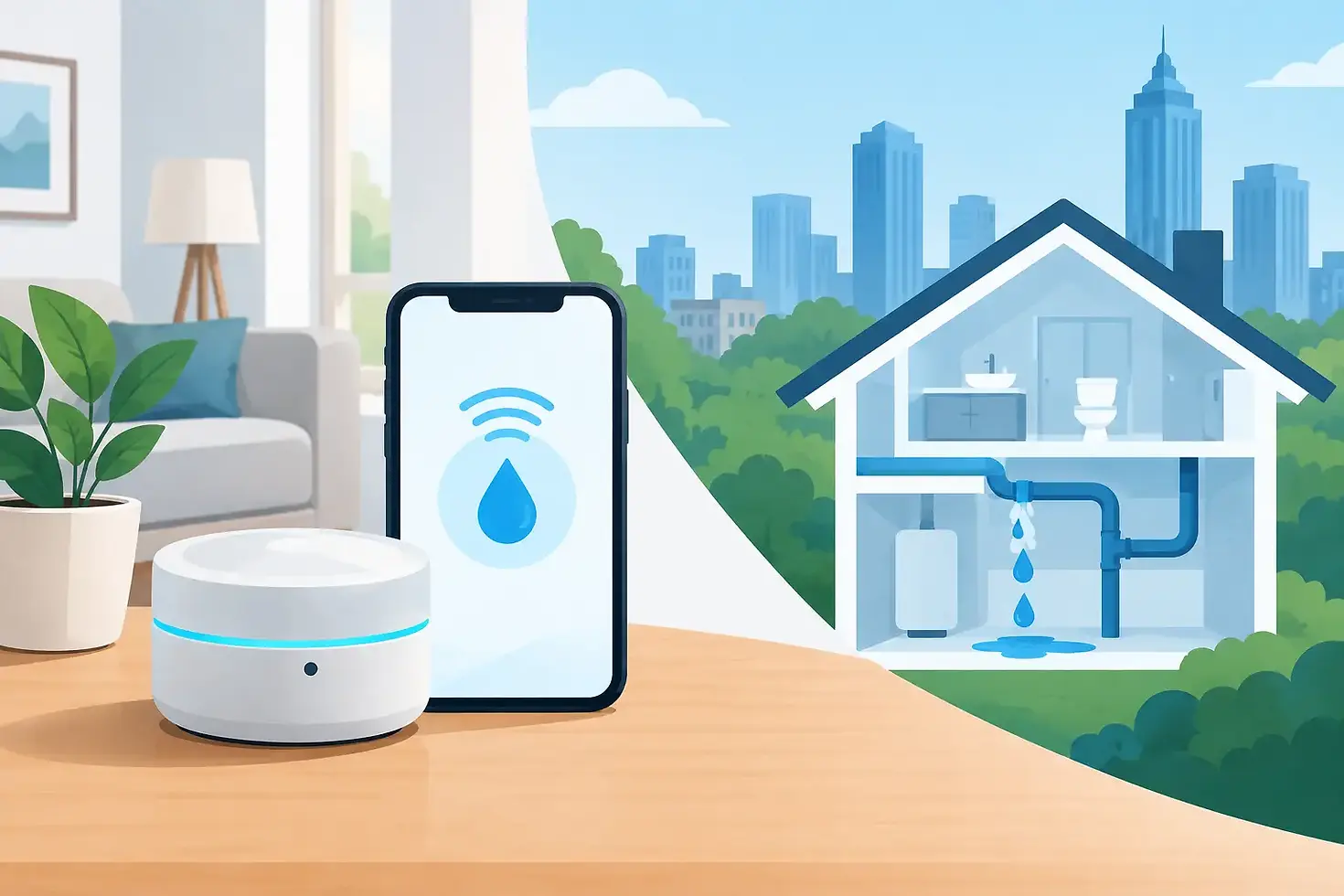
A smart leak detector is a small battery-powered sensor placed where water does not belong: beside a water heater, under a sink, behind a refrigerator, near a washing machine, or by an HVAC condensate line. When its metal contacts touch water, it sounds a local alarm and sends an alert to a phone through an app, hub, or WiFi connection.
That alert is the real value. A traditional water alarm can make noise, but it only helps if someone is home and close enough to hear it. A connected detector can notify a homeowner at work, a landlord managing a rental, or a property manager responsible for several units. Some systems can also alert more than one person, which is useful when a family is traveling or a home is vacant.
The important limitation is that a standard sensor detects water only where it is placed. It will not find a hidden pinhole leak inside a wall or a slow plumbing issue that never reaches the sensor. It is an early-warning tool, not a replacement for sound plumbing, proper appliance connections, or routine maintenance.
Smart Leak Detector Review: The Features Worth Paying For
The best detector is not always the one with the longest feature list. It is the one that fits the risk area, communicates reliably in the home, and is simple enough to maintain. For most households, four features deserve the most attention.
Reliable alerts and a loud local alarm
Phone notifications matter most when nobody is home, but a loud onboard alarm still matters. If a dishwasher starts leaking while the family is asleep, a 90-decibel alarm may get attention faster than a phone alert on a nightstand. Look for systems that allow push notifications and, when available, email, text, or shared household alerts.
Before buying, consider how the device connects. WiFi sensors can be convenient because they may not need a separate hub, but they depend on a strong wireless signal at the installation location. Hub-based systems may be more dependable in larger homes and can support several sensors, though they add equipment and setup. A detached garage, crawl space, or utility room at the far end of the house may need a WiFi check before a sensor is installed there.
Sensor design and placement flexibility
A basic puck-style sensor is a good fit for flat, accessible surfaces under sinks and beside appliances. It is inexpensive and easy to replace, but it only covers its immediate location. For larger or harder-to-reach areas, choose a model that supports an external sensing cable. The cable can run along the edge of a water heater pan, behind a washing machine, or around a basement utility area so it detects water across a wider path.
A few products include temperature and humidity monitoring. Temperature alerts can be useful in an unoccupied property during a North Carolina cold snap, particularly around vulnerable pipes. Humidity readings are helpful for spotting unusually damp utility closets or bathrooms, but they should not be mistaken for a mold inspection or a diagnosis of a hidden leak.
Battery life and maintenance reminders
Most smart leak detectors run on replaceable batteries. Battery life can range from roughly one to several years depending on the model, connection method, and alert frequency. Long battery life is convenient, but a low-battery warning is more valuable than a lofty estimate printed on the box.
Put a reminder on the calendar to test every sensor twice a year. Press the test button if the model has one, check that the app receives the alert, and inspect the area for dust, corrosion, or an object that could block the contacts. A detector left under a sink for three years without testing is less useful than a simpler model that gets regular attention.
Smart-home compatibility, with realistic expectations
If the home already uses a smart-home platform, it can be helpful to choose sensors that work within that system. A leak alert might trigger additional lights, announce a warning through a speaker, or notify household members through a shared app. Those are useful conveniences, especially for larger homes.
Compatibility should not be the deciding factor if it compromises reliability. A detector that communicates directly and consistently is better than one with elaborate automation that fails when the internet, hub, or account connection changes. For many homeowners, dependable alerts and easy battery replacement are enough.
Where to Put Water Sensors First
Placement has more impact than brand name. Start with the areas most likely to leak and most likely to create expensive damage before someone notices. In a typical Raleigh-area home, that means the water heater, washing machine, kitchen sink, dishwasher, refrigerator water line, and every bathroom vanity or toilet area.
Next, think vertically. A small leak in an upstairs laundry room or bathroom can damage ceilings, insulation, light fixtures, and finished spaces below. Those rooms deserve priority even if the plumbing looks new. In homes with a crawl space, sensors can help near accessible plumbing or a condensate pump, but they need a reliable connection and a location protected from routine ground moisture.
Do not place a sensor where normal splashing, mopping, or condensation will constantly trigger it. Under a bathroom sink is usually better than directly beside a shower. Near a water heater, place it at the lowest point where water would collect, ideally in or just outside a properly installed drain pan depending on the layout. The goal is quick detection without nuisance alarms that train people to ignore notifications.
The Bigger Upgrade: Leak Detection With Automatic Shutoff
A standard detector tells you water is present. An automatic shutoff system can close the main water supply after it detects unusual flow or receives a signal from a leak sensor. That can be a major step up for second homes, vacant rentals, properties with frequent travel, or homes where a severe leak could run for hours before anyone can respond.
There are two common approaches. A point-of-leak sensor works with a valve controller to shut off water after a sensor gets wet. A whole-home flow monitor watches water use through the main line and looks for patterns that suggest continuous leaking. The latter can catch some plumbing problems that a floor sensor misses, but it costs more and may require professional plumbing and electrical coordination.
Automatic shutoff is not right for every property. A flow-based system may occasionally flag legitimate water use, such as irrigation, a long shower, or a running appliance, depending on its settings. A shutoff valve also needs to be installed where it can be serviced. Homeowners should ask who will configure the system, how manual override works, and what happens during a power or internet outage.
Installation Details That Prevent Frustration
Most individual leak sensors are homeowner-friendly, but the surrounding setup can be less simple than it appears. A WiFi password, account setup, app permissions, and weak signal areas can all affect whether the alert reaches the right person. Test the device from outside the home on cellular data, not only while connected to the home network.
For appliances, the sensor should be installed only after checking the hoses, valves, drain connection, and floor condition. A detector cannot fix a brittle rubber washing machine hose or an improperly seated dishwasher line. Replacing aging supply hoses with quality braided hoses and confirming that an appliance is level can reduce the chance of the alert ever being needed.
If sensors are part of a larger smart-home project, clean installation matters. Smart Future Home can help homeowners place devices thoughtfully, improve WiFi coverage where needed, and coordinate leak detection with practical repairs or an automatic water shutoff plan. The best setup is one that fits the home rather than forcing the home to fit the device.
Who Should Buy Which Type?
A basic WiFi or hub-connected puck sensor is a sensible choice for a homeowner who wants coverage under sinks, behind appliances, and near the water heater. It is affordable, quick to install, and effective when placed well.
A detector with a sensing cable makes more sense around a laundry room, water heater closet, or utility space where water could spread before reaching a small sensor. For a rental property, shared alerts and a clearly labeled response plan are often more important than advanced automation. For a frequently vacant house or a property with expensive finishes, an automatic shutoff system deserves serious consideration.
The right choice depends less on having the newest smart-home gadget and more on knowing where water could cause the most harm. Put the first sensor where a leak would be costly and hard to notice, test it before you forget about it, and give every alert a response plan. That small bit of preparation can protect far more than a phone notification suggests.


Comments