

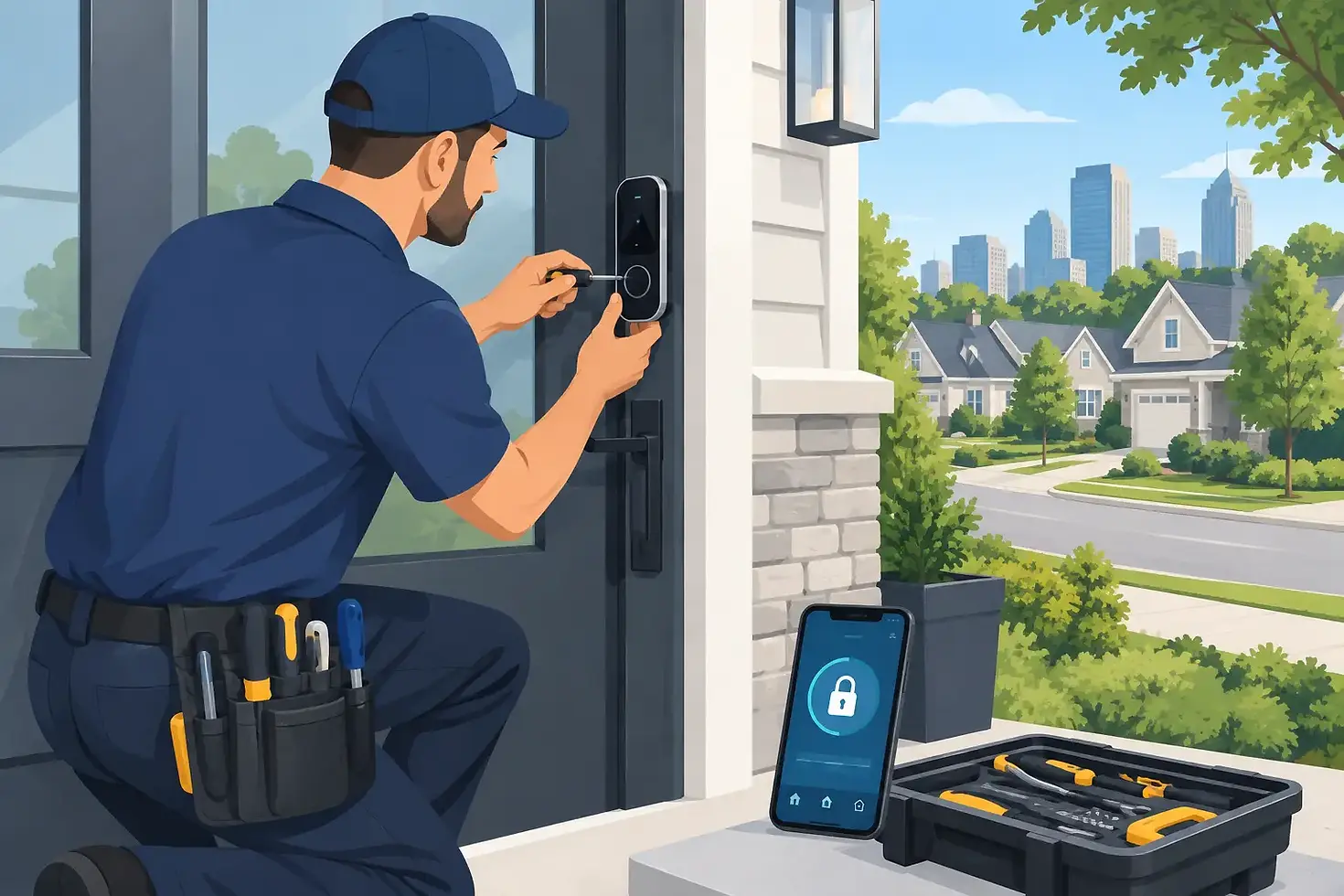
Smart Lock Installation Service in Raleigh

A smart lock should make coming home easier, not leave you standing on the porch troubleshooting an app, a deadbolt, or a WiFi connection. A professional smart lock installation service helps make sure the hardware fits the door, the latch operates smoothly, and the features you paid for work the way they should from day one.
For homeowners, renters, property managers, and small businesses around Raleigh, a smart lock can be a practical upgrade for daily access, guest entry, deliveries, and property security. The right installation is about more than replacing a deadbolt. It is about getting the door, lock, connection, and user setup working together.
What a Smart Lock Installation Service Should Include
A quality smart lock installation starts with the physical door. The installer checks the existing deadbolt bore, backset, strike plate, door thickness, frame condition, and alignment before mounting anything. Many locks are designed to replace a standard single-cylinder deadbolt, but not every door is prepared for a direct swap.
A door that sticks, sags, or requires a hard push to latch can cause problems with either a traditional or smart lock. Motorized deadbolts are especially sensitive to resistance. If the bolt has to fight the frame every time it locks, batteries drain faster, the mechanism wears sooner, and the lock may report a jam. Correcting the strike plate or door alignment before installation is often the difference between a lock that feels dependable and one that becomes a daily frustration.
Once the hardware is installed, the service should include testing the key, thumb turn, keypad or fingerprint reader if included, auto-lock setting, and exterior access functions. If the lock connects through Bluetooth, WiFi, Z-Wave, Matter, or another smart-home platform, setup should also cover pairing and a basic connectivity check.
This is where a provider with both handyman and smart-home experience is useful. The job may require a small door repair, careful adjustment of a strike plate, or help improving nearby WiFi coverage. Those details should not be treated as separate problems after the lock is already on the door.
Choosing the Right Smart Lock for Your Door
The best smart lock depends on how you use the property. A family that wants simple keypad entry may not need the same features as a property manager handling multiple rentals or a small office controlling employee access. Buying based only on a brand name or an app feature can lead to an installation that does not match your needs.
Keypad, fingerprint, or phone access?
Keypad locks are popular because they allow family members, guests, cleaners, or contractors to enter with a code instead of a physical key. Many models let you create temporary codes and remove them when access is no longer needed. This is helpful for short-term guests, dog walkers, and service appointments.
Fingerprint access can be convenient for households that prefer not to remember codes, although performance can vary by device and conditions. Phone-based access is useful when you want remote control or status alerts, but it depends on a well-configured app and, for remote functions, a reliable home network.
For many homes, a keypad lock with a physical key backup offers the most practical balance. A key override can be reassuring during a power outage, a drained battery, or a phone issue. Battery-powered smart locks generally remain functional during a power outage, but features that depend on the internet or a hub may not be available until service is restored.
Compatibility matters more than the box suggests
Before selecting a lock, check whether it works with the systems already in your home. Some locks connect directly to WiFi, while others use a bridge, hub, or specific protocol. A lock may technically support voice control or automation, but those benefits depend on the platform you use and whether the devices are properly paired.
Door construction also matters. A standard wood door with a properly aligned deadbolt is usually straightforward. Metal doors, older doors, narrow stile doors, doors with decorative trim, double doors, and worn frames may need additional evaluation. If the deadbolt shares space with a handle set, the spacing between holes can affect which models will fit.
Renters should confirm what changes are permitted before replacing hardware. Some smart locks retain the existing exterior key cylinder or work with the current deadbolt, which may be a better choice where lease rules limit modifications. Property managers may prefer locks that can be reset and reprogrammed quickly between tenants.
What Happens During Professional Smart Lock Installation
A well-planned visit begins with confirming the lock model, door type, and desired access method. The installer removes the existing deadbolt, measures the opening, and checks whether the bolt lines up cleanly with the strike plate. If adjustment is needed, it is addressed before the new lock is tightened into place.
The exterior keypad, reader, or escutcheon must sit squarely and securely without pinching wires or binding against the door surface. Inside, the mounting plate and battery pack are installed according to the manufacturer’s requirements. The deadbolt is then tested repeatedly with the door open and closed. Testing with the door closed is essential because a lock that moves freely in open air can still bind against a misaligned frame.
After the mechanical work is complete, setup moves to the smart features. This can include creating the primary account, pairing the lock with a phone or hub, updating firmware when appropriate, naming the device, and setting access codes. The homeowner should also know how to lock and unlock the door manually, replace batteries, use the backup key if applicable, and respond to low-battery alerts.
A good installer does not rush through the handoff. Smart-home equipment is only convenient when the person using it feels comfortable managing it. A few minutes spent reviewing the app and testing a code can prevent an unnecessary service call later.
Common Problems a Professional Can Prevent
The most common smart lock issue is not the app. It is a deadbolt that does not line up with the strike plate. If you have to pull, lift, or push the door to lock it, the lock is working harder than it should. This can cause failed locking attempts, excessive noise, and shorter battery life.
Weak WiFi is another common concern, especially with locks located at exterior doors far from the router. Not every lock needs WiFi at the door, but remote control and notifications may require a bridge or dependable network signal. In some homes, a WiFi assessment, better router placement, or a mesh-network adjustment makes more sense than repeatedly resetting the lock.
Account ownership can also create headaches. The person who manages the property should be the primary account owner whenever possible. For rental homes and small businesses, document access codes and remove former users promptly. A professional installation can help establish a clean setup, but ongoing access management remains part of responsible property care.
When Smart Lock Installation Is Worth It
DIY installation can be a reasonable option when you have a standard door, a compatible lock, good alignment, and confidence using the manufacturer’s app. Professional help is worth considering when the door needs adjustment, the lock will connect to other smart-home devices, multiple doors need to be managed, or you want the job completed cleanly without trial and error.
It is also a practical choice when you are already planning related work. A video doorbell, security camera, smart lighting, WiFi upgrade, or entryway repair can be coordinated with the lock installation so the entrance works as one connected system rather than a collection of separate devices.
Smart Future Home approaches these projects with the same care used for everyday repairs and larger technology upgrades. The goal is not simply to mount a device on the door. It is to leave you with an entry that looks clean, operates correctly, and fits the way you live or manage your property.
A smart lock is most useful when it becomes routine: your door closes, the bolt engages without resistance, the right people have access, and you do not have to think twice about whether it worked. If your door or network needs attention before that can happen, addressing those details first is a sound investment in a more dependable home.


Comments